5 Sept 2026
5 min read
How Online Yoga Helps People Get Healthier
Online yoga improves flexibility, back pain, stress, sleep and balance. Here's what changes, roughly when, and how to build a practice that lasts.
Most people picture yoga as something you commit to. A studio membership. A different wardrobe. A version of yourself who wakes up at six and owns a bolster.
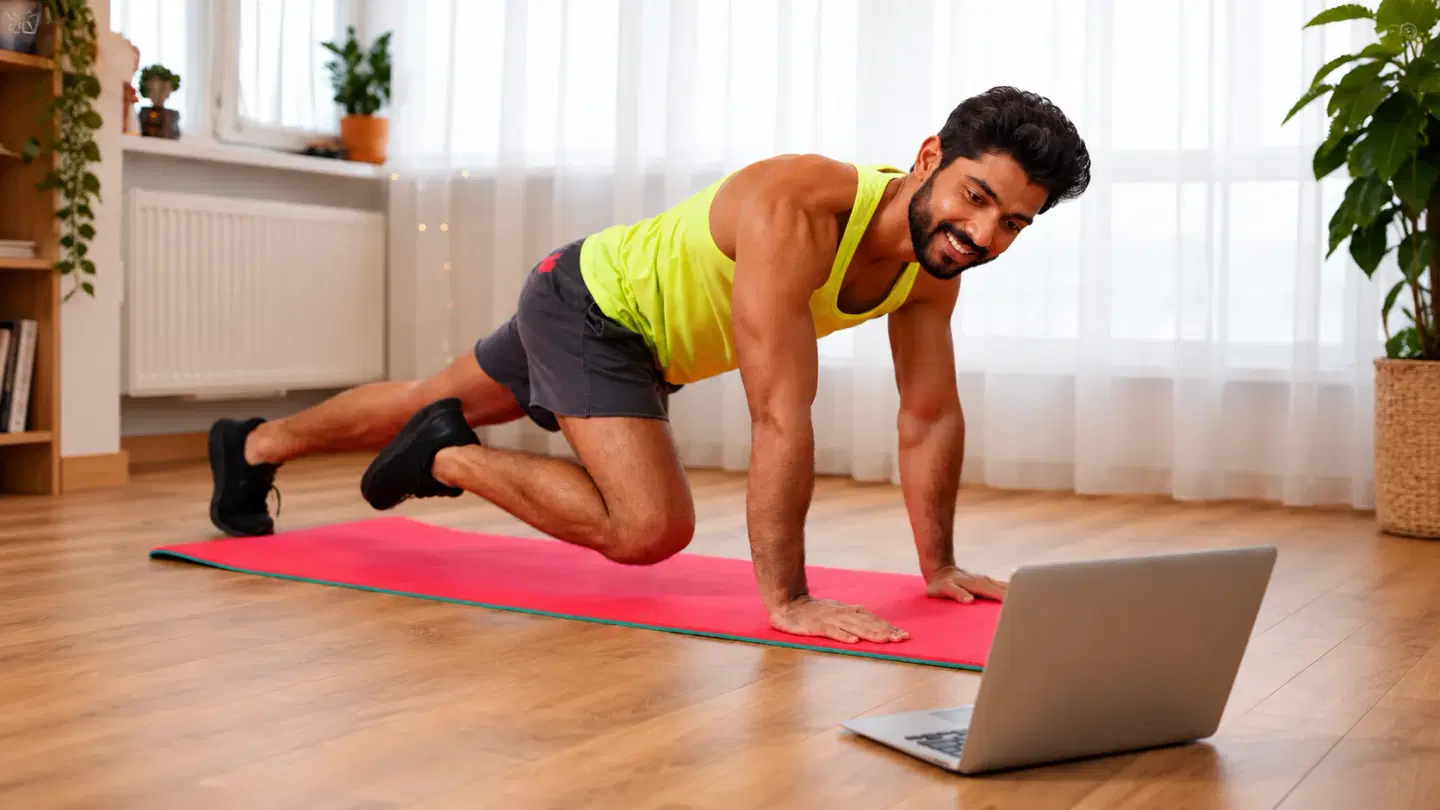
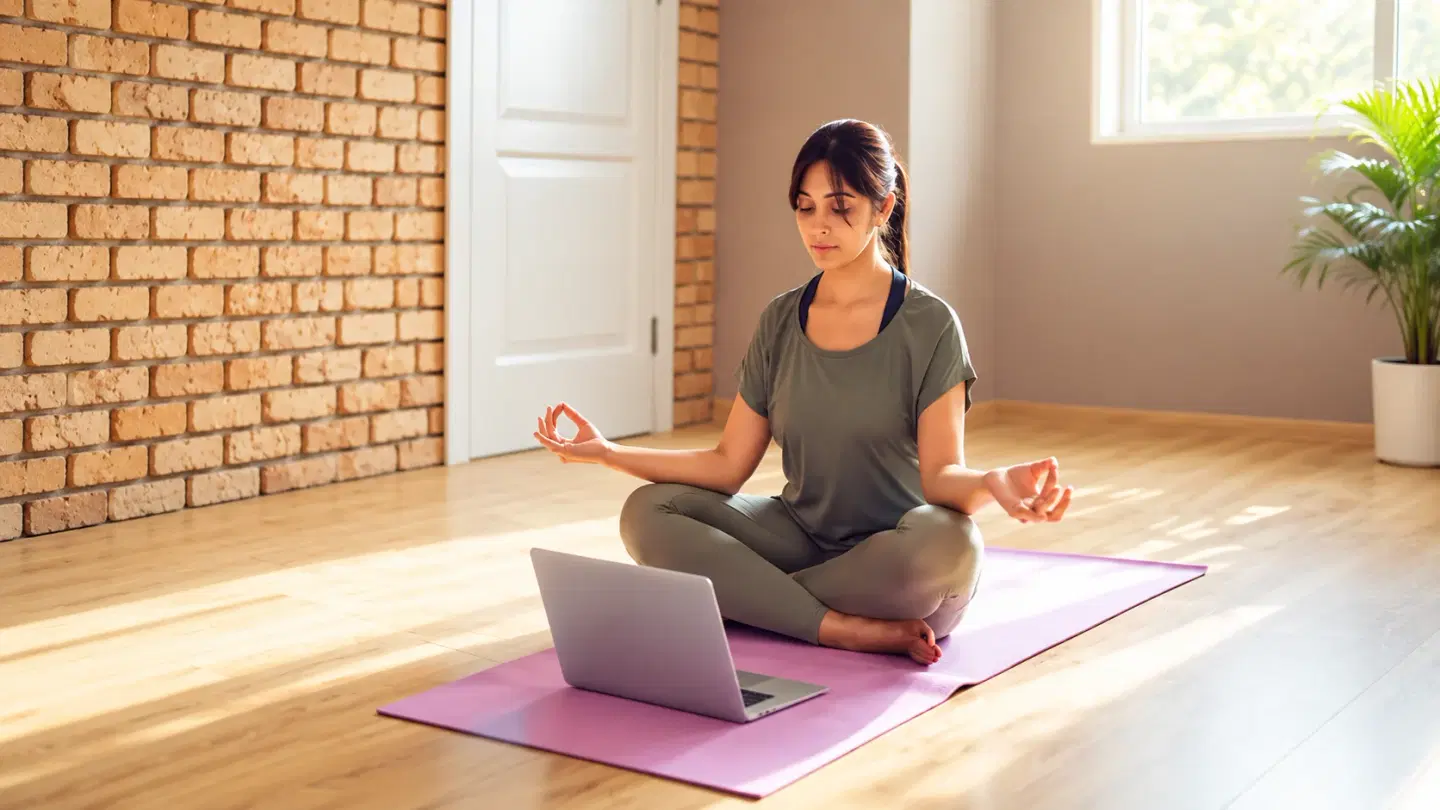
The version that actually changes people's health is far smaller than that: on a mat in the corner of a living room, with a coach on a screen who can see what your spine is doing. That's the whole thing. And it's enough.
What changes, and roughly when?
The honest appeal of yoga isn't a dramatic transformation — it's how quickly the small things start moving, and how they compound.
In the first two weeks, you'll mostly notice how you feel afterwards. Slow, extended exhalations shift you toward parasympathetic activity — a measurable effect, visible in heart rate variability, not a metaphor. In practical terms: you finish the session less wound up than you started it. Nothing else has changed yet, but that's a real thing to have bought in a session.
By weeks three and four, sleep is usually the next domino. Multiple studies point to improved sleep quality with regular practice, and the effect appears strongest with evening restorative sessions. This is also where the habit tends to stick, because better sleep makes everything else easier.
Around six to eight weeks, the physical change becomes obvious. Hip, hamstring and thoracic spine range of motion improve noticeably. This matters well beyond touching your toes — restricted thoracic and hip mobility are behind a great many shoulder and lower back complaints.
Over three months, the slower outcomes arrive. Resting blood pressure tends to drop, particularly with practices that emphasise slow breathing. Balance improves — underrated, and for anyone past fifty, single-leg control is one of the highest-value investments available for the decades ahead. And you'll have built genuine isometric strength through your shoulders, core and hips. Yoga won't replace progressive resistance training if maximal strength is your goal, but for someone currently doing nothing, it's a substantial step up.
The claim with the strongest evidence behind it
If you have chronic low back pain, this is the section worth reading twice.
Yoga is one of the few movement practices to make it into major clinical guidance for the condition. The American College of Physicians lists it among recommended non-drug, first-line treatments for chronic low back pain. The effect size is comparable with other exercise-based approaches — which is to say, it works about as well as the other things that work, and it's more pleasant than most of them.
That's a modest-sounding claim. It's also a rare one. Very few wellness practices have a professional body of physicians pointing at them.
Why doing it online makes it more likely to happen
The reasonable question is how a teacher corrects your alignment through a screen. In practice, live online classes handle this better than people expect, and the format solves problems a studio can't.
Consistency is the entire mechanism. Yoga's benefits come from frequency, not intensity. A few sessions a week for a year will do more for you than one immaculate ninety-minute studio class a month. Removing the commute is the single biggest driver of whether people keep going.
The camera sees more than the room does. A coach watching you side-on has a clearer view of your spinal position than a coach circulating among twenty mats.
Nobody is watching except your coach. Plenty of people who'd benefit most from yoga won't walk into a public class — beginners, anyone self-conscious about their body, anyone rebuilding after injury. At home, that barrier simply isn't there, and they start.
Real one-to-one instruction becomes affordable. Online sessions cost lesser than private studio sessions, which puts personalised coach within reach of people who'd otherwise never experience it.
You can find the right specialist, not just the nearest one. Prenatal yoga, practice adapted for hypermobility, work around a knee replacement, sessions built for desk-bound necks — geography stops limiting you.
Your first eight weeks
Book 2-3 sessions a week. Ambitious daily plans collapse by week three. Modest ones compound for years.
Match the style to what you want. Vinyasa and power yoga for fitness and heat. Hatha for a slower foundation. Iyengar for precision and alignment, especially with an injury history. Yin and restorative for stress, sleep and connective tissue.
Tell your coach everything. Injuries, surgeries, pregnancy, hypermobility, blood pressure, dizziness. This is what shapes your session, and it's the main safety mechanism in an online class.
Set the camera side-on, full body in frame. Give your coach something to work with.
Get a decent mat, two blocks and a strap. Blocks aren't a beginner's crutch — they're how you reach the pose properly instead of forcing your way into a bad version of it.
Review it at eight weeks, not two. Mobility, sleep and stress all move on a slower timeline than motivation does.
Practising safely
Yoga is low-risk, and the risks that exist are predictable: hamstring insertions strained in forced forward folds, wrists overloaded in weight-bearing poses, necks compressed in shoulder stand and headstand, shoulders worn down by repetitive chaturanga. Nearly all of it comes from pushing into range you haven't yet earned — which is exactly what a coach watching you is there to prevent.
Pain isn't part of the practice. Sensation, yes. Sharp or pinching, no.
If you're pregnant, or managing uncontrolled high blood pressure, glaucoma, osteoporosis, a disc issue or recent surgery, speak to your doctor and brief your coach. Several common poses need modifying, and a good coach will have done it many times before.
The takeaway
Online yoga isn't a diluted version of the studio experience. For many, it's the version that actually happens, week after week — and that's the only version that produces anything.
2-3 sessions a week, for two months, with someone who knows your history. That's a small enough commitment to make this week, and enough to change how your back feels, how you sleep, and how you handle a difficult day.